Amapas makes a lovely base for couples who want the same trip but not necessarily the same schedule.
One partner may be ready to talk, move, and explore before breakfast. The other may need quiet time, a slower start, and a strong cup of coffee before becoming fully social. One may do their best thinking in the morning. The other may find their rhythm later in the day.
That difference doesn’t have to create friction. It can create a better routine.
The trick is to stop trying to do everything together. Instead, build a daily rhythm with a few shared anchors and plenty of flexible space. Amapas is especially well suited to this approach because it offers a calmer hillside setting while keeping Old Town, also known as Zona Romántica, close by.
Here’s how couples can trade focus time, protect their energy, and still enjoy plenty of Puerto Vallarta together.
Start with a shared morning anchor
Different schedules work best when the day begins with one small ritual you both enjoy.
Keep it simple:
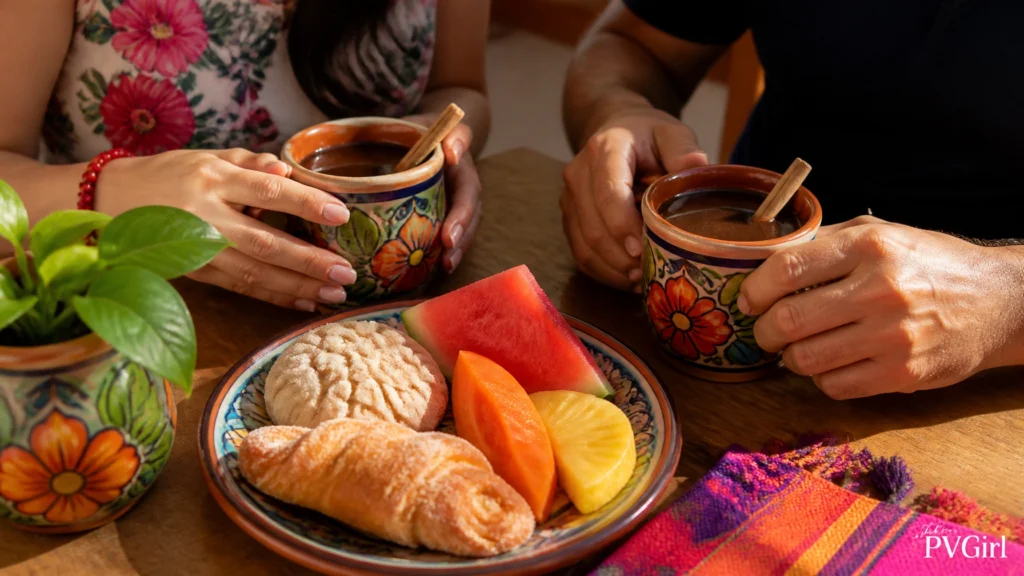
- Brew café de olla.
- Share fresh fruit or pan dulce.
- Sit together for 15 minutes.
- Talk through the day’s commitments.
- Decide when you’ll reconnect.
The goal isn’t to create a rigid itinerary. It’s to establish a warm starting point before the day divides into separate rhythms.
Morning light is particularly helpful here. It makes the start of the day feel open and calm without demanding too much energy. If one partner is already alert and the other is still easing into the day, a quiet breakfast gives both people room to arrive at their own pace.
A useful rule: don’t begin the day with a list of complaints or logistics. Begin with coffee, food, and one pleasant question such as, “What would make today feel good?”
That tiny shift can change the entire mood.

Use focus swaps instead of fixed roles
A focus swap means one partner gets uninterrupted concentration while the other takes the lead on shared tasks. Later, you switch.
This works well when your energy levels or work obligations don’t match.
For example:
- Partner A takes the first quiet block for calls or concentrated tasks.
- Partner B handles breakfast cleanup and chooses the midday plan.
- At lunchtime, you reconnect.
- Partner B gets the next focused block.
- Partner A takes responsibility for food, errands, or activity planning.
This isn’t about keeping score. It’s about making the day feel balanced without forcing both people to be productive at the same time.
If you’re staying in one of our puerto vallarta rental condos, agree on the signals that mean “I’m focused” and “I’m available.” A closed door, headphones, or a specific chair can quietly communicate that a focus block is underway.
Keep the signals neutral. They shouldn’t feel like rejection. They’re simply tools that help two adults share space with less interruption.
Match the task to the energy
Not every hour deserves the same type of work.
When energy is high, schedule tasks that require judgment, creativity, or important decisions. When energy drops, switch to lighter work such as organizing notes, answering routine messages, reviewing documents, or planning the next day.
Couples can help each other by discussing energy rather than assuming it.
Try saying:
- “I’m sharp for the next two hours.”
- “I can talk, but I don’t have much decision-making energy.”
- “I need quiet more than company right now.”
- “I’m ready for food and a walk.”
- “I can handle the practical details while you finish.”
This kind of language is more useful than simply saying, “I’m busy.” It tells your partner what you need and what you can offer.
Amapas also makes it easy to reset between blocks. The walk from Amapas to Los Muertos Beach takes 10–15 minutes, giving you a manageable way to clear your head, stretch your legs, and change the pace before returning to your day.
Protect one quiet block for each person
Couples often plan shared activities but forget to plan separate recovery time.
That’s a mistake, especially during a longer stay.
One person may recharge through conversation and movement. The other may need silence, reading, or a slow meal. Both are valid. A quiet block gives each partner time to reset without making the other feel responsible for their mood.
Set aside at least one personal block each day. It could be:
- A solo coffee.
- A swim.
- A short walk.
- Time with music.
- Reading in a quiet corner.
- A personal call.
- A few minutes of stretching.
- Exploring a local market alone.
The important part is to agree that personal time is normal. It isn’t a sign that something is wrong. It’s one of the easiest ways to return to shared time feeling more patient and present.
Make food the bridge between schedules
Meals are excellent transition points when two people work differently.
If one partner finishes early, they can choose the lunch spot or pick up something local. If the other needs more time, the meal can wait without turning into a major event.
Keep a few easy options nearby:
- Fresh tortillas.
- Local fruit.
- Pan dulce.
- Ceviche.
- Tacos.
- Grilled seafood.
- Beans and rice.
- Freshly prepared salsa.
A shared meal doesn’t need to be elaborate. It just needs to feel intentional.

You can also create a “first bite together” rule. Even if one person eats earlier, save a small treat or drink to share when the other is ready. That gives the day a point of connection without requiring identical schedules.
For a more local experience, ask for recommendations from people who know the neighborhood well. The best food memories often come from a small order shared at the right moment rather than a complicated plan made days in advance.
Build a two-speed afternoon
Afternoons can be tricky. One person may still have meetings or concentrated tasks. The other may be ready to explore.
A two-speed plan keeps both people happy.
The more energetic partner can:
- Visit a market.
- Pick up fruit or pastries.
- Browse local artisan goods.
- Take a short walk.
- Find a snack for later.
- Enjoy a swim.
- Read somewhere peaceful.
The working partner can finish their block without feeling guilty for holding the day back.
Then, create a clear reconnection time. Avoid vague promises such as “later.” Choose something specific:
- “Let’s meet for lunch at noon.”
- “I’ll be ready for a walk at three.”
- “Let’s share a snack when this block ends.”
- “We’ll head toward Old Town after the final call.”
Specific timing prevents small misunderstandings from becoming unnecessary tension.
Choose a rental that supports flexibility
The right place can make different routines much easier.
Before booking, ask about:
- Internet reliability.
- Quiet sleeping arrangements.
- Natural morning light.
- Seating options.
- Kitchen equipment.
- Water availability.
- Nearby food.
- The walk to Los Muertos Beach.
- The best way to handle transportation uphill.
Couples who need different schedules should look for a condo or apartment that gives both people breathing room. Even a modest amount of separation can make a major difference when one person is speaking, resting, or concentrating.
Our local approach also helps. If you’re comparing rentals in puerto vallarta, ask questions before you arrive. You can also browse condo and apartment rentals puerto vallarta for more ideas on what supports a smoother stay. Personalized guidance can help you choose a better fit for your daily rhythm rather than simply picking a place based on photographs.

Create a low-pressure evening reset
When both people finish their responsibilities, avoid launching straight into another plan.
Give yourselves a transition.
Change clothes. Drink water. Have a small snack. Take a few quiet minutes. Then decide what kind of shared time sounds right.
You might want:
- A relaxed meal.
- A walk toward the beach.
- Live music.
- Tacos in Old Town.
- A calm drink.
- A swim.
- An early night.
- A short outing followed by reading.
The best routine is not the one that fills every hour. It’s the one that leaves enough energy for each other.
Amapas works beautifully for this because you can move between quiet hillside time and the lively food, music, and local experiences of Old Town without turning every outing into a major production.
Try this sample routine
Here’s a flexible example for a couple with different work patterns:
- 7:00–8:00: Coffee, breakfast, and a quick plan for the day.
- 8:00–11:00: Partner A takes the first focus block while Partner B enjoys a slower start or a short outing.
- 11:00–12:00: Shared meal and conversation.
- 12:00–2:00: Partner B takes the main focus block while Partner A handles an errand or explores.
- 2:00–3:00: Lunch, beach walk, or quiet reset.
- 3:00–5:00: Flexible individual time.
- After 5:00: Shared Puerto Vallarta experience with no work talk unless both people want it.
Adjust the times to match your commitments. The structure matters more than the clock.
Different schedules don’t have to divide a trip. With focus swaps, honest energy check-ins, and a few dependable moments together, they can give each person more freedom while making your shared time feel more meaningful.
That’s the Amapas advantage: room to follow your own rhythm, with Puerto Vallarta waiting when you’re ready to reconnect. For another helpful angle, check out puerto vallarta mexico condo rentals before you plan your next stay.
For local updates and more inspiration, follow us on Instagram.
More Stories
Amapas Wellness Wanders for Remote Couples
Amapas for Slow Travelers: Build a Better Puerto Vallarta Week
Amapas on Foot: A Practical Guide to Flexible Neighborhood Days